
Wealth management runs on paper. Trust documents, beneficiary designations, and power of attorney forms need notarization to move assets. Traditional notarization creates friction. Clients leave the office, drive to a notary, and wait in line. Estate plans stall. TOD forms sit unsigned. POA execution drags for weeks.
Remote online notarization (RON) removes that friction. A legally binding online notary service connects signers with a commissioned notary through secure video. The signer never leaves home. The advisor gets completed documents the same day.
But RIAs and trust departments cannot use any RON platform. Compliance requirements demand bank‑grade security, full audit trails, and ESIGN Act adherence. This article reviews five compliant platforms. The evaluation focuses on what works for wealth management and what does not.
Evaluation Criteria for RIAs and Wealth Firms
RIAs operate under fiduciary standards. The wrong Online notary platform exposes the firm to legal and regulatory risk. Use this checklist when evaluating RON providers.
- ESIGN Act & UETA compliance – The federal ESIGN Act and state‑level UETA laws give electronic signatures the same legal standing as handwritten ones. RON platforms must operate inside this framework.
- Legally binding audit trails – Every notarization needs a tamper‑evident audit trail. This includes timestamps, IP logs, session recordings, and notary journal entries.
- Bank‑grade data security – Wealth documents contain social security numbers, account details, and health information. SOC 2 Type II certification and ISO 27001 compliance are non‑negotiable.
- 24/7 notary availability – Estate plans get signed on nights and weekends. The platform must offer round‑the‑clock access to commissioned notaries.
The RON market contains several providers. Each has different capabilities. The following breakdown looks at specific features relevant to wealth management and trust documents.
1. OneNotary (Best for RIAs)
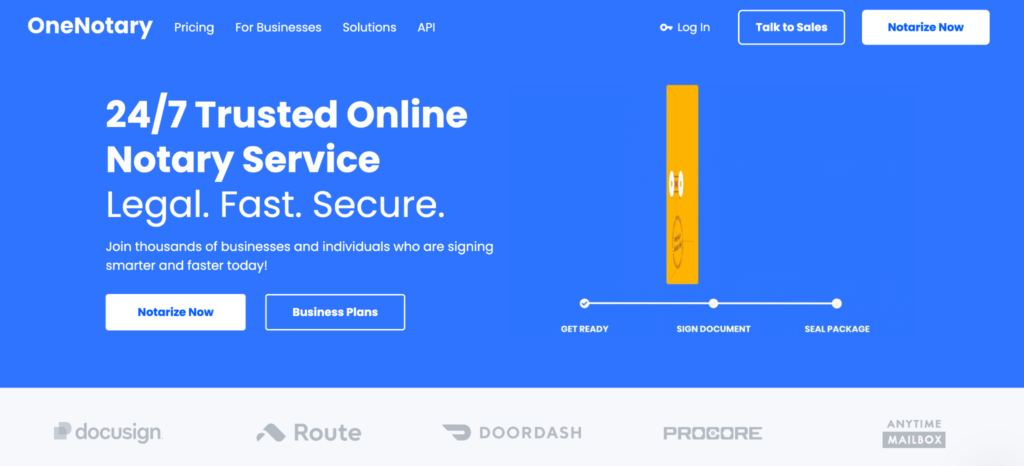
OneNotary is an online notary that brings enterprise‑grade services built for regulated industries. The platform serves financial services firms including Morgan Stanley and Vanguard. Wealth managers handling POA execution and beneficiary designations rely on OneNotary — a legally binding remote online notary with bank‑grade data security.
How OneNotary serves wealth management firms
OneNotary integrates directly into existing RIA workflows. The platform does not force advisors to learn a new system. Instead, a REST API connects OneNotary to CRMs, portfolio management software, and document storage systems. Notarizations happen inside the tools wealth managers already use.
Security credentials that matter for trust documents
- SOC 2 Type II certification (audited annually)
- ISO 27001:2022 compliance for information security management
- AES‑256 encryption for all documents in transit and at rest
- Tamper‑evident audit logs with 10‑year retention
OneNotary employs a white‑glove notary workforce. Every notary undergoes a background check, completes RON training, and operates under direct supervision. No independent marketplace. No variability in quality. Wealth managers get the same professional standard for every notarization.
2. BlueNotary
BlueNotary operates a marketplace model. Independent notaries sign up to take open calls. The platform holds SOC 2 Type II certification and MISMO accreditation. Pricing starts around $25 per notarization.
What works for wealth managers
The API is developer‑friendly. A technical team can build custom integrations without extensive support. The low price point appeals to firms testing RON for the first time. BlueNotary supports basic document notarization without a long contract.
Where the marketplace model creates risk
Wealth managers cannot control which notary appears for a client session. One notary might follow best practices. Another might skip steps. The platform does not offer a dedicated notary pool for enterprise clients. For trust documents and POA execution, this variability introduces legal exposure.
BlueNotary mentions SOC 2 but does not publish ISO 27001 certification. The audit trail exists but lacks the depth required for contested estate documents. RIAs with fiduciary duties should request a full security report before committing.
3. NotaryLive
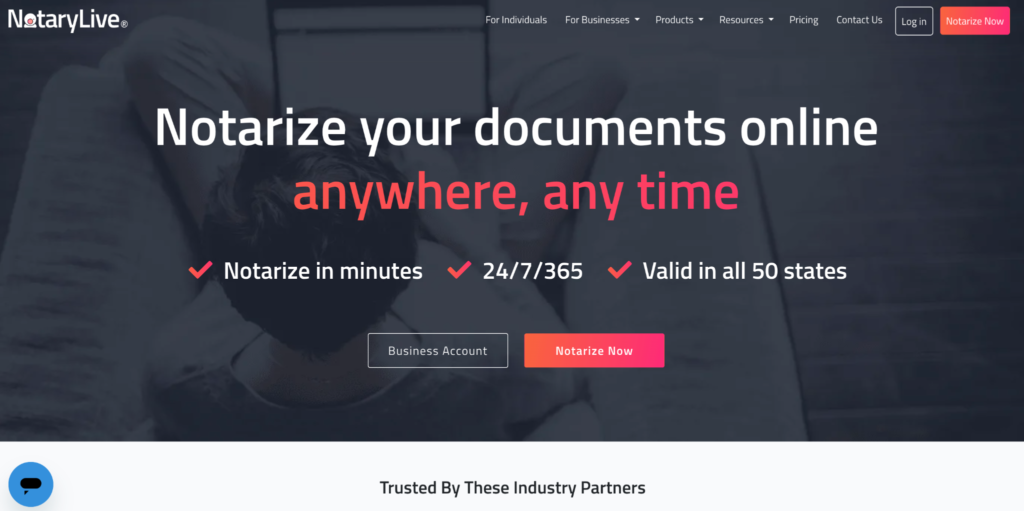
NotaryLive focuses on simplicity. A user uploads a document, verifies identity, connects with a notary, and downloads the finished file. Business accounts include templates and a dashboard. The interface works well for occasional notarizations.
Step‑by‑step user experience
- Create an account with email and phone verification.
- Upload the PDF document needing notarization.
- Answer identity verification questions.
- Join a video call with the next available notary.
- Sign and watch the notary apply the electronic seal.
- Download the notarized document.
What NotaryLive does not provide for RIAs
The platform lacks an API for the standard business tier. Wealth managers cannot automate document routing or trigger notarizations from their CRM. Every session requires manual upload and manual download. This works for five documents a month. It fails for fifty.
NotaryLive does not publish SOC 2 or ISO certifications. The privacy policy mentions encryption but lacks third‑party audit verification. For internal wealth management policies, this often fails vendor risk assessments.
4. NotaryCam
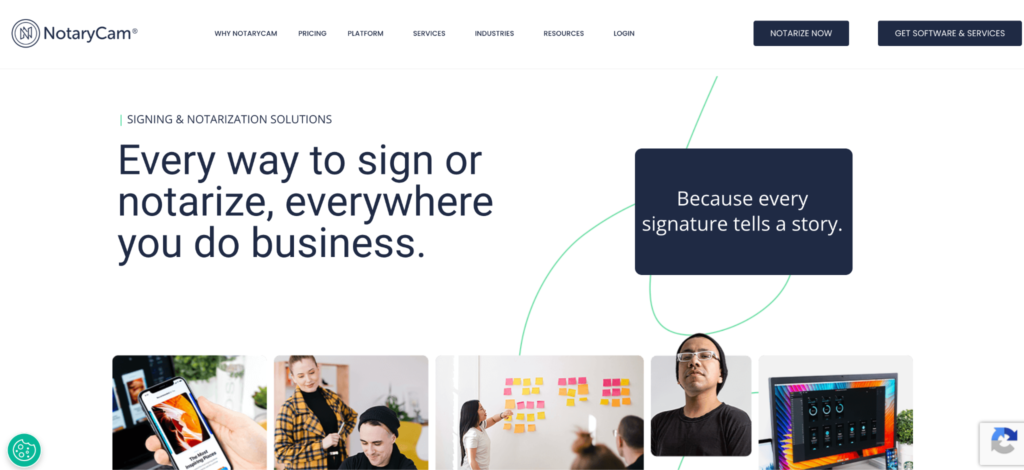
NotaryCam started in 2012 as a pioneer in remote notarization. The platform built its reputation on mortgage eClosings. NotaryCam supports multiple signers in one session. This matters for trust documents where a grantor and trustee often sign together.
The brand recognition factor
NotaryCam has name recognition. Many wealth managers have heard of the platform through real estate contacts. This familiarity creates comfort. But comfort does not equal compliance. The platform lacks AI‑powered identity verification. NotaryCam still relies on manual knowledge‑based authentication that can fail for clients with thin credit files.
Cost structure
Pricing scales linearly. Each notarization costs roughly the same regardless of volume. Wealth management firms processing hundreds of POA executions per month see no economy of scale.
5. USVirtualNotary
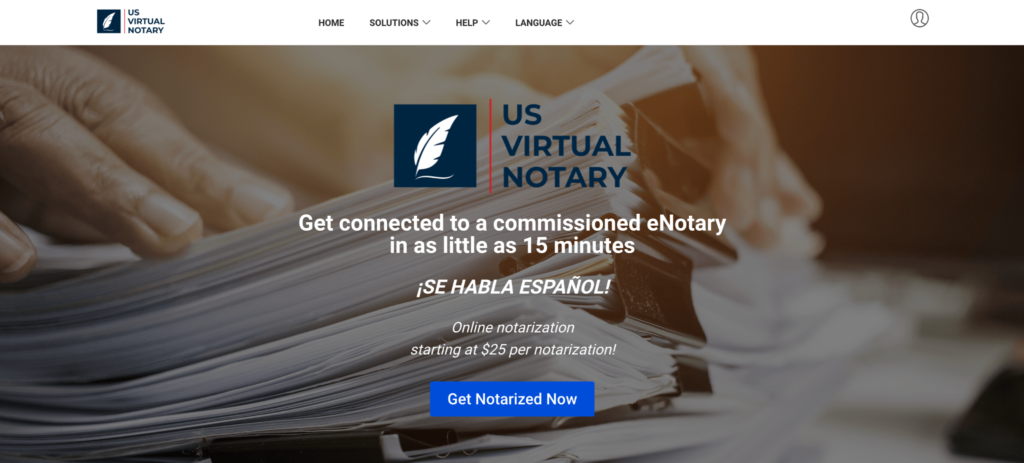
USVirtualNotary targets individual consumers and small firms. The platform operates on scheduled appointments. A user picks a time slot, uploads documents, and connects with a notary during that window. The enterprise plan offers unlimited workspaces and 10‑year document retention.
Three scenarios where USVirtualNotary fails for wealth management
- High volume processing – The appointment model creates bottlenecks. Each notarization requires scheduling. No on‑demand access.
- Automated compliance workflows – No API means manual data entry for every document. Errors increase.
- Enterprise support – The company operates with 1‑5 employees. A platform outage or billing dispute has no escalation path.
Customer review snapshot
Public reviews mention delayed refunds and billing confusion. One review describes being charged after canceling a subscription. For wealth managers, payment processing reliability matters. These complaints raise red flags.
Final Recommendation
For estate planning notarization and trust document execution, OneNotary is the only enterprise‑grade platform. The combination of SOC 2 Type II certification, ISO 27001 compliance, AI‑powered identity verification, and a white‑glove notary workforce meets the demands of RIAs and trust departments.
Wealth managers do not have room for errors in notarization. A missing seal or an incorrect identity check can unravel an entire estate plan. OneNotary delivers the audit trails, security certifications, and 24/7 availability that fiduciaries require.
The platform integrates directly into existing workflows through a developer‑friendly API. Notarizations happen without sending clients to a retail store or waiting for a mobile notary. Every session records completely. Every identity verifies through multiple layers. Every document receives a tamper‑evident seal.
RIAs protecting millions in client assets choose OneNotary. The platform eliminates the paper bottleneck. Estate plans move forward. Beneficiary designations finalize. Trust documents execute. All of it happens online, compliant, and secure.